










Poolex Nano Compact Heat Pump with Wi-Fi for Above-Ground Pools
£412
Recommended add-ons


This item: Poolex Nano Compact Heat Pump with Wi-Fi for Above-Ground Pools
Price range: £412 through £537
Price range: £412 through £537
Documents
Product overview
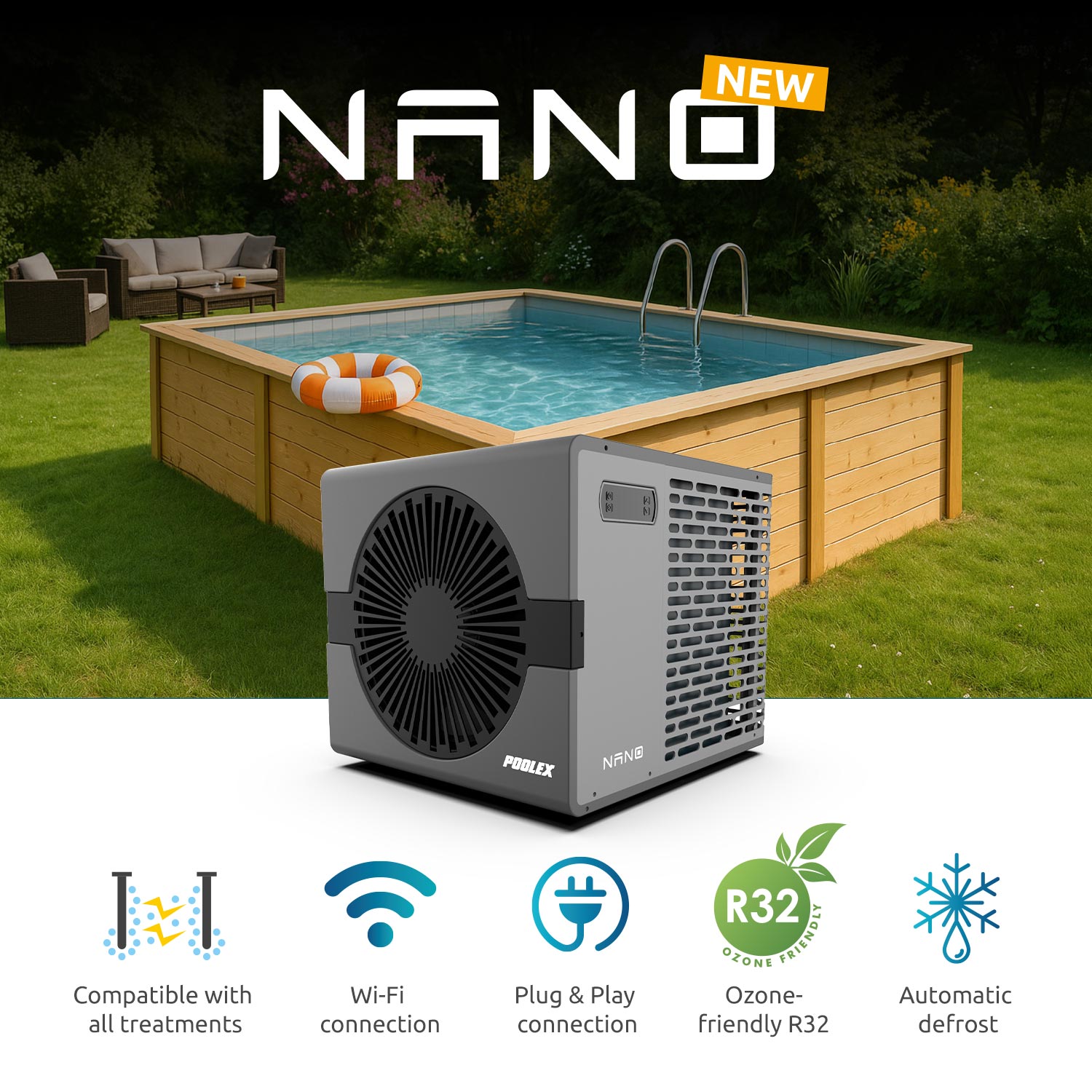
The Poolex Nano keeps small above-ground pools heated even on cloudy days and cooler nights. Installation is simple, the mains cable plugs into a standard 13A socket, and the included 32/38mm hose tails work with most push fit pool hoses. With automatic defrost, smart Wi-Fi control and an efficient COP of up to 5.4, the Nano keeps your pool water warm without any fuss.
Highlights
The Nano 3 delivers up to 3.25kW of heat when the outside temperature is 26°C and up to 2.19kW when the outside temperature is 15°C (dependent on water temperature and heat loss), please make sure you use our sizing guide to select the correct capacity heat pump for your pool
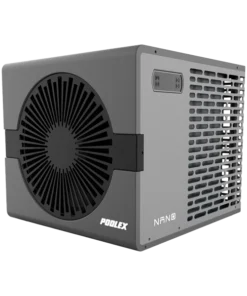
The compact footprint fits easily into small gardens, on patios, or tight areas, and whisper quiet operation keeps your garden peaceful and your neighbours happy
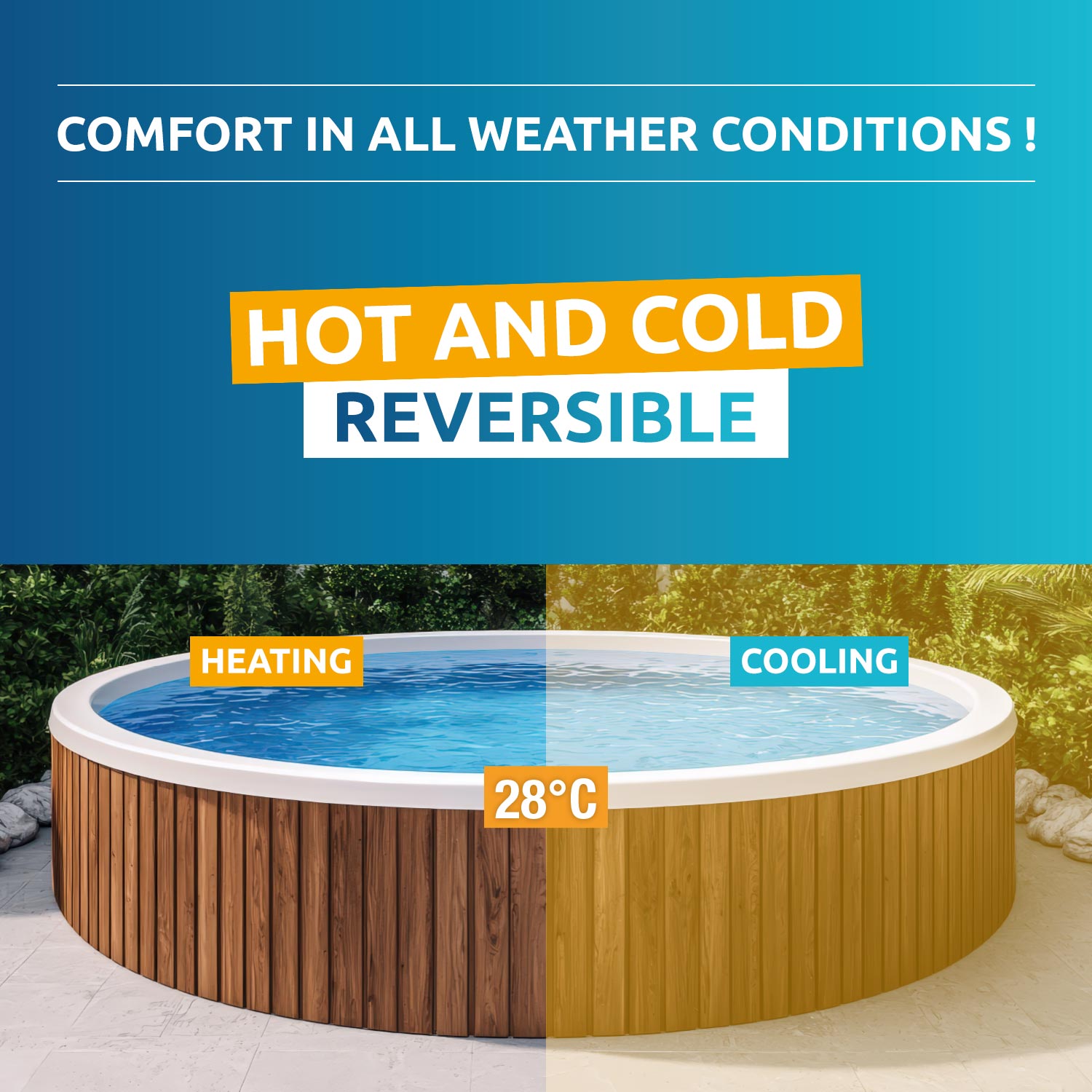
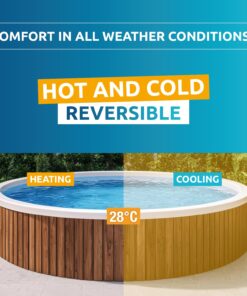
Switches between heating and cooling modes to keep your water perfect, while a COP of 5.4 means you get up to five times the heat output for every pound spent on electricity
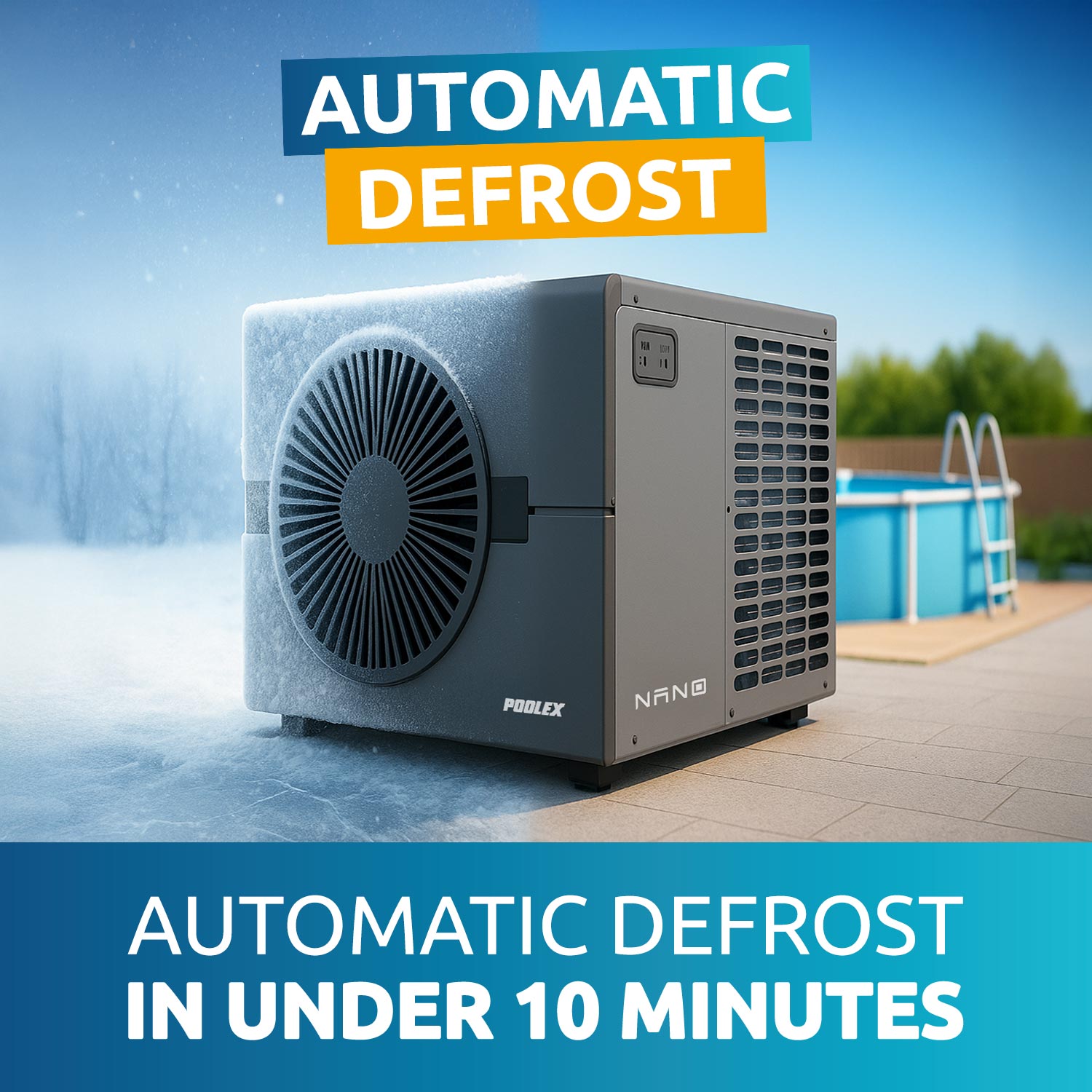
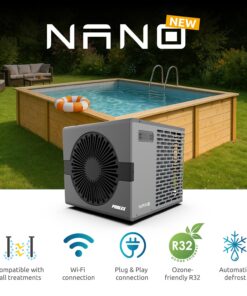
Automatic defrosting prevents ice build-up, so the heat pump can continue working when the temperature drops
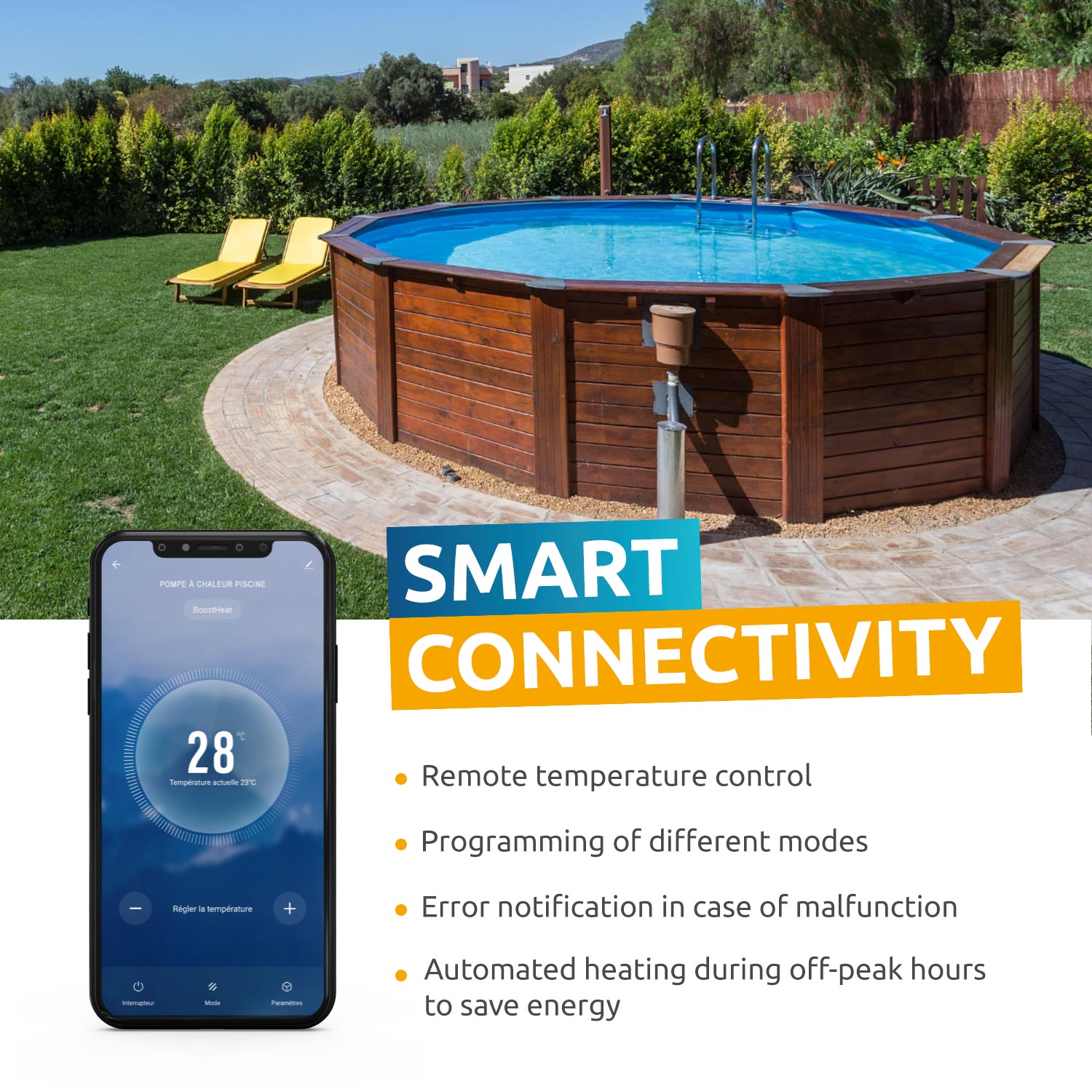
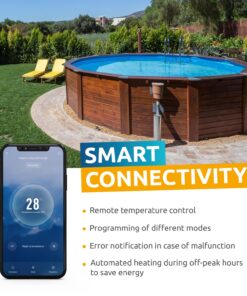
Effortlessly connects to 32mm or 38mm pool hoses for a quick setup, plus built-in Wi-Fi lets you monitor performance and adjust the temperature from your phone
Corrosion-resistant titanium heat exchanger is compatible with both salt and chlorine pools, two year warranty plus five year parts on compressor and 15 year parts on heat exchanger (total)
Poolex recommended pool sizes based on Southern France, for UK see our sizing guide
Details
Installation
Electrical
The Nano 3 and 5 models come fitted with a mains cable and UK plug as standard, making them suitable for RCD protected outdoor sockets, this cable can be removed and the unit can be hardwired if required.
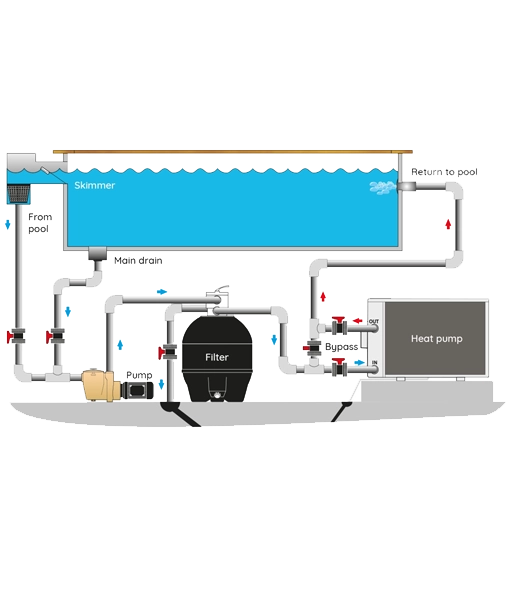
Water inlet and outlet connections are 32mm, the unit comes supplied with PVC hose connectors that are suitable for 32/38mm hoses.
Bypass Kit
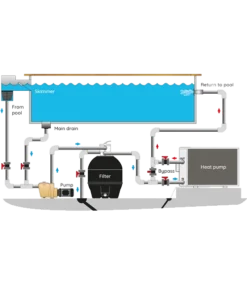
If the flow rate through your heat pump is too high it can take longer to heat your pool or you may struggle to achieve your desired temperature, our bypass kit for above ground pools optimises the flow rate to maximise the heat transfer to your pool water. A bypass kit also allows the circulation and filtering of pool water without heating and for winterising your heat pump.
Wi-Fi Connectivity
The Poolex Nano features 2.4Ghz Wi-Fi connectivity via the Poolex App (you can also use the Smart Life App).
Once you have downloaded the Poolex App (or Smart Life) will need to create an account before you can continue to pair with your heat pump and control it remotely.
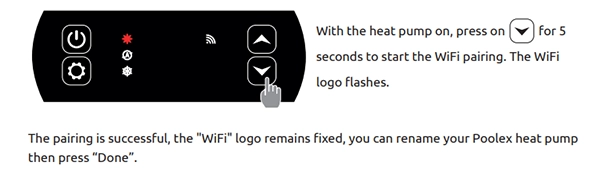
Once you get to the point of adding a device in your App you will need to activate the pairing mode on your Nano, to do so please follow this procedure:
Positioning
Your Nano swimming pool heat pump should always be installed outside, the metal case provides necessary protection from the weather.
The manufacturer literature may state that the heat pump should be positioned above the waterline, the assumption being that pools are in-ground, therefore the heat pump would sit at ground level.
If you have an above-ground pool please position your heat pump at ground level (therefore below the waterline), there is no need to elevate the heat pump.
In the box
Poolex Nano
Pre-fitted cable with UK plug
Hose connectors (32mm and 38mm)
Instruction manual
Documents & Warranty
Heat pump warranty: 2 Years / Compressor: 5 Years / Titanium heat exchanger: 15 Years – Parts only after year 2, warranty covers manufacturing defects only
Important: Damage caused by frost is not covered by the warranty, please make sure you correctly winterise your heat pump and drain all residual water during periods of non-usage
FAQs
Can I use the Poolex Nano heat pump for an above-ground pool?
Yes. The Poolex Nano is specifically designed to heat small above-ground pools.
There are a few factors to consider before making your choice, including your pool size, what water temperature you would like, the average outside temperature where you live and how long you would like to use your pool, please head over to our heat pump size guide for more information on choosing the correct size heat pump for your pool.
What are the main features of the Poolex Nano heat pump?
Plug & play setup: Plugs directly into a standard UK 13A socket (RCD protection required)
Smart connectivity: Features built-in Wi-Fi for remote smartphone control
Universal fitting: Compatible with standard 32mm and 38mm pool hoses
All weather reliability: Includes an automatic defrost system and dual heating/cooling modes
Durable build: Equipped with a corrosion-resistant titanium heat exchanger, making it safe for both salt and chlorine pools
How energy efficient is the Poolex Nano?
The Poolex Nano is very economical, featuring a Coefficient of Performance (COP) of 5.5 at air temperatures above 24°C. This means that for every £1 spent on electricity, the unit delivers up to five times the heat output into your pool (COP drops when the outside temperature is cooler).
Will the Poolex Nano fit in a small garden or patio?
Yes. The Poolex Nano features an ultra-compact footprint designed specifically for tight spaces, small gardens, and patios. Additionally, it operates with whisper-quiet technology to ensure it does not disturb you or your neighbours.
Can the Poolex Nano heat a pool in cooler weather?
Yes. The automatic defrosting function will prevent ice build-up on the back of the unit without requiring manual intervention, however the ability to heat efficiently at lower air temperatures will depend on the size of your pool and the water temperature you require.
We are more than happy to advise on the correct size heat pump for your pool or you can head over to our heat pump size guide for more information.
Should I insulate my pool?
If you are thinking of heating your pool you should cover the pool when not in use as 80% of heat loss occurs through surface evaporation, a separate solar or bubble cover is a worthwhile investment if you don’t have an existing cover.
With an above ground pool it is especially important to keep it covered as these pools are not well insulated against heat loss – additional insulation around the sides and bottom of an above-ground pool can help to retain valuable heat – in fact properly insulating your pool can extend your season or even reduce the size of heat pump required.
What is COP?
COP stands for Coefficient of Performance. Simply put, it is a ratio that tells you how much heat you return to your pool for every unit of electricity you pay for.
How it Works
If a heat pump has a COP of 5.0 it means: input 1kW of electricity, output 5kW of heat, you are essentially getting 4kW of free heat extracted from the ambient air.
Why Air Temperature Matters
Heat pumps are aerothermal, meaning they pull heat from the surrounding air, because of this, the COP changes based on the weather.
Warm weather (e.g. >24°C), the air is full of heat energy, making it easy for the pump to achieve a high COP (like 5.0 or higher).
Cooler weather (e.g. <15°C), there is less heat available in the air. The pump has to work harder, which lowers the COP and reduces the total heat returned to your pool.
Expert Tip: When choosing a heat pump, don't just look at it's maximum COP, consider the air temperatures during your specific swimming season. A pump that is powerful enough for July might struggle in May or September.
You can refer to our Heat Pump Sizing Guide to ensure you select the correct capacity for your pool size and desired swimming season.
Sizing
Not sure what capacity heat pump is right for you, our handy sizing guide can help you make the right choice
Specifications
Nano 3
Max. Heating Capacity A26/W26 |
3.25kW |
Power Input A26/W26 |
0.59kW |
COP A26/W26 |
5.5 |
Max. Heating Capacity A15/W26 |
2.19kW |
Power Input A15/W26 |
0.55kW |
COP A15/W26 |
3.95 |
Max. Power Input |
1.25kW |
Voltage |
230V |
Refrigerant |
R32 |
Noise Level (10m) |
<30dba |
Fan Direction |
Horizontal |
Water Connections |
32mm |
Dimensions (L x W x H) |
440mm x 400mm x 390mm |
Weight |
25Kg |
Nominal flow |
1.4m³/h |
Wi-Fi Connectivity |
2.4GHz only (Requires Poolex App) |
Nano 5
Max. Heating Capacity A26/W26 |
5.0kW |
Power Input A26/W26 |
0.93kW |
COP A26/W26 |
5.4 |
Max. Heating Capacity A15/W26 |
3.36kW |
Power Input A15/W26 |
0.81kW |
COP A15/W26 |
4.16 |
Max. Power Input |
1.75kW |
Voltage |
230V |
Refrigerant |
R32 |
Noise Level (10m) |
<30dba |
Fan Direction |
Horizontal |
Water Connections |
32mm |
Dimensions (L x W x H) |
440mm x 400mm x 390mm |
Weight |
32Kg |
Nominal flow |
1.4m³/h |
Wi-Fi Connectivity |
2.4GHz only (Requires Poolex App) |